The organizers, of course, did not forget to mention that the next panel discussion is preparing for April, when the impact of the economic crisis and austerity measures will most likely be discussed. They also invited everyone to join the reading group dedicated to the book “Capital in the 21st Century” by the French economist Thomas Piketty, which is organized by the Association “Cultural Front” in the premises of the Toshin Local Committee.
Opatija – Climate change has been a topic that has attracted the attention of both economic and environmental experts and politicians and the general public for decades. With the aim of introducing the citizens of Opatija and its surroundings to the existing theories on climate change, and with the aim of promoting a culture of tolerant discussions and critical thinking, the topic of the sixth panel discussion within the project ‘Opatija Coffeehouse Debates’ was chosen precisely the issue of global warming or cooling, and technologies that can affect future climate change.
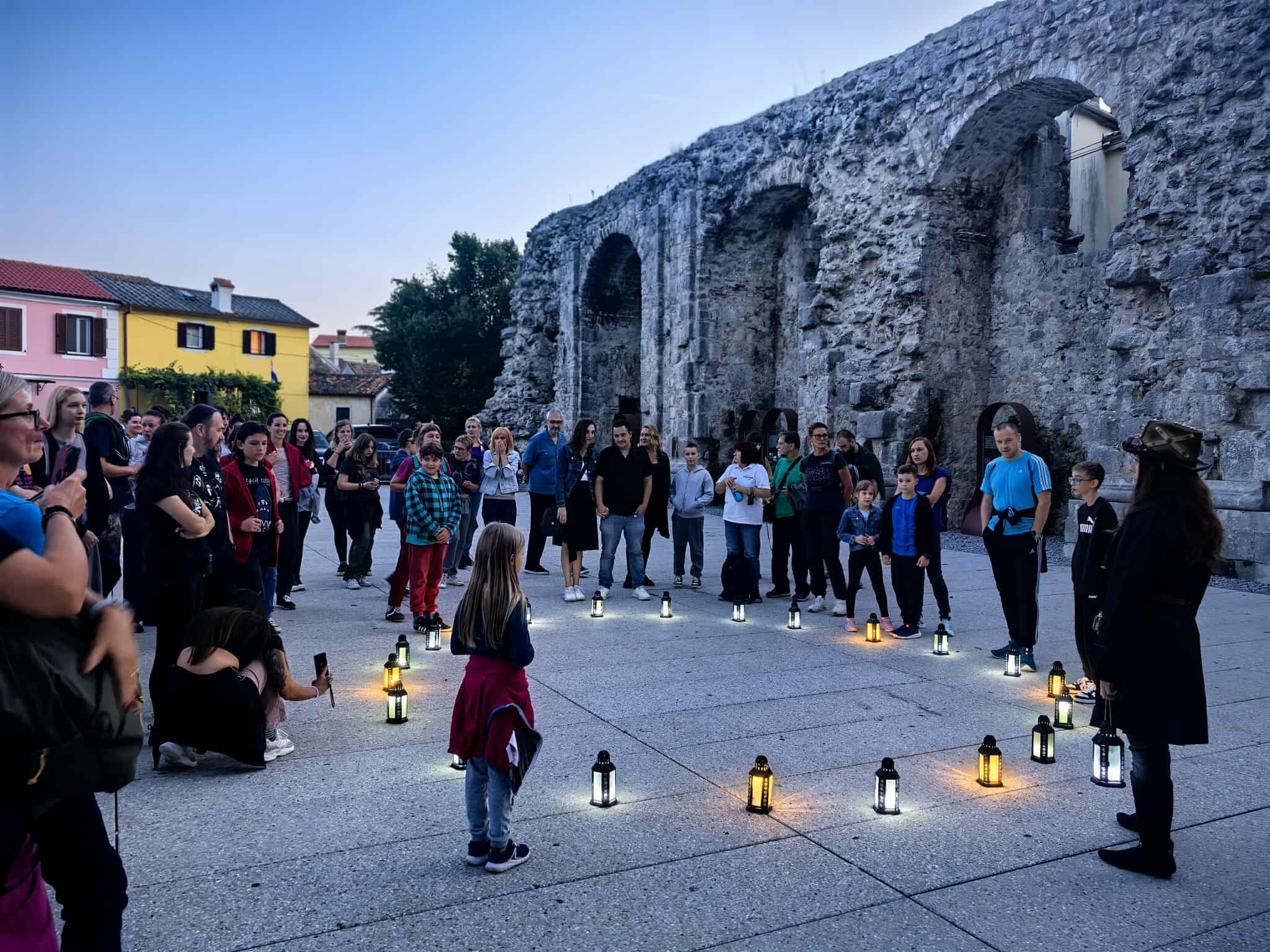
The organizers of the project, the Association for the Development of Youth Culture ‘Cultural Front’ and Milenij hoteli, have brought as panellists of the sixth panel discussion academician Vladimir Paar, a professor at the Faculty of Science of the University of Zagreb, a renowned Croatian physicist and science popularizer, known for his suspicion of global warming, and Ivo Orlić, a professor from the Department of Physics of the University of Rijeka, a scientist with many years of experience working at prestigious foreign institutes, and one of the initiators and directors of the Innovation and Technology Park of the University of Rijeka. In addition, climate change was discussed by around 60 visitors who guided the discussion with their questions and asked the panellists new questions and challenges. Therefore, it should not be surprising that the whole event lasted over two and a half hours, and that many others debated and talked with the panellists long after the end of the ‘official’ part of the discussion.
Professor Ivo Orlić pointed out that progress in the development of production and increasing the number of inhabitants strengthens the impact that man has on the nature around him. Warning that since the industrial revolution (and especially in the last 70 years) the amounts of greenhouse gases have risen significantly, and the global temperature rise corresponds to them, he pointed out that a similar correlation existed in the past, and that every major increase in greenhouse gases in the past caused a global temperature increase. He pointed out that people should turn to renewable energy sources, although he stressed that they too have their drawbacks (such as the fact that they are not permanent but depend on other factors; for example, solar energy is not produced when it is cloudy or when night falls; wind energy cannot be harnessed when there is no wind).
Academician Vladimiar Par warned that climate change is often viewed only in the context of the Earth's atmosphere, while forgetting about the impact coming from space, by the gravitational field of other planets or cosmic rays. He questioned the theory that greenhouse gases are the main cause of global warming (although he did not deny that they have the effect of conserving heat coming to Earth from the Sun), and argued that the correlation between the rise in global temperatures and the rise in the amount of greenhouse gases in the atmosphere is a question of causality, but in a different way than is commonly thought. According to academic Paar, temperatures do not rise due to the increase in the amount of greenhouse gases, but on the contrary, the amount of greenhouse gases increases due to the increase in temperature (since the increase in temperature melts tundra in the north and releases large amounts of methane, a greenhouse gas that has an even stronger effect than carbon dioxide.
An interesting discussion, supported by the results of scientific research, continued until the closure of the cafeteria of the Hotel Continental, but also longer, on the Facebook page of the Opatija Coffeehouse Debates project. The organizers, of course, did not forget to mention that the next panel discussion is preparing for April, when the impact of the economic crisis and austerity measures will most likely be discussed. They also invited everyone to join the reading group dedicated to the book “Capital in the 21st Century” by the French economist Thomas Piketty, which is organized by the Association “Cultural Front” in the premises of the Toshin Local Committee.
N. Cvjetvović / PodUčkun.net